The 7 Best Arm Slings for Shoulder and Elbow Injuries (2026)
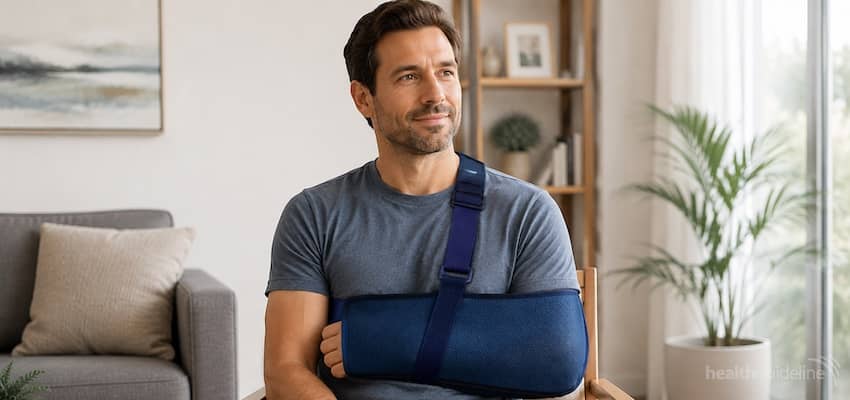
An arm sling supports the weight of your arm and limits shoulder and elbow movement so an injured or post-surgical joint can rest and heal. The best sling for you isn’t the fanciest one — it’s the one that matches your injury, fits your frame, and is comfortable enough that you’ll actually keep it on. Below are seven arm slings that are genuinely available on Amazon right now, chosen to cover the situations people most often shop for: everyday support, post-surgery immobilization, sleeping, hot weather, active recovery, and children.
Quick picks
Best overall
Velpeau Arm Sling Shoulder Immobilizer
Soft, breathable, and switches between the left and right arm.
Best for post-surgery / rotator cuff repair
DonJoy UltraSling IV
Clinical-grade immobilization that keeps pressure off your neck.
The right sling depends on your specific injury. Use your surgeon’s or physical therapist’s instructions first — this guide helps you match a well-made, currently available sling to what they’ve told you.
What is the best arm sling for a shoulder or elbow injury?
For most people recovering from a sprain, fracture, dislocation, or general shoulder or elbow injury, the Velpeau Arm Sling Shoulder Immobilizer (Comfort type) is the best all-round choice: it’s soft, breathable, adjustable one-handed, and fits either arm. After shoulder surgery, a clinical immobilizer such as the DonJoy UltraSling IV is usually more appropriate. Always follow your provider’s guidance.
How we chose these arm slings
We compared arm slings currently listed on Amazon (US) against the criteria clinicians actually emphasize: level of support (basic sling vs. immobilizer vs. abduction sling), sizing and fit, breathability, one-handed adjustability, ease of putting the sling on and taking it off, and washability. We cross-referenced how and how long slings are used with orthopedic sources including the American Academy of Orthopaedic Surgeons (OrthoInfo) and Healthgrades. We did not perform hands-on lab testing; instead, we prioritized well-established products, honest fit for a specific use-case, and real availability. Prices shift constantly, so we list approximate bands and link to the live Amazon listing rather than quoting a fixed number.
The best arm slings at a glance
| Arm sling | Best for | Type | Standout feature | Approx. price* |
|---|---|---|---|---|
| Velpeau Arm Sling (Comfort type) | Overall / everyday | Standard support sling | Soft foam pouch, fits either arm | ~$25 |
| DonJoy UltraSling IV | Post-surgery / rotator cuff | Clinical immobilizer | 3-point straps, ~15° abduction cushion | ~$40–$70 |
| Vive Shoulder Abduction Sling | Holding the arm away from the body | Abduction sling + pillow | Wedge pillow, exercise ball | ~$30–$45 |
| Comforband Arm Sling | Budget / lightweight | Standard support sling | One size fits most, breathable | ~$15–$25 |
| Think Ergo Arm Sling Sport | Active / on the go | Sport sling | Neoprene padding, reversible | ~$20–$30 |
| Velpeau Mesh / Breathable Sling | Hot weather / humidity | Ventilated support sling | Full mesh pouch, waist strap | ~$20–$30 |
| BraceAbility Pediatric Arm Sling | Children | Kids’ support sling | Small sizing, padded strap | ~$20–$35 |
01 / BEST OVERALL
Velpeau Arm Sling Shoulder Immobilizer (Comfort type)
The Velpeau Comfort sling is the best everyday choice for a fracture, sprain, dislocation, or general shoulder/elbow injury. The arm rests in a soft, foam-lined pouch with a crossed-back strap that spreads the load off your neck, a thumb loop to keep your hand supported, and a waist strap to stop the arm swinging. It fits either arm and adjusts with one hand.
Key features
- soft sponge/foam arm pouch
- crossed-back shoulder strap
- thumb loop
- adjustable waist strap
- reversible for left or right arm
- multiple sizes (by bust measurement).
Pros
- comfortable for all-day and overnight wear
- breathable
- easy one-handed micro-adjustment
- well-established brand.
Cons
- the foam pouch runs warm in hot climates (see the mesh version below)
- getting the initial strap orientation right takes a minute.
Best for: most people who need general arm support while an upper-limb injury heals.
02 / BEST FOR POST-SURGERY AND ROTATOR CUFF RECOVERY
DonJoy UltraSling IV
If you’re recovering from shoulder surgery, the DonJoy UltraSling IV is the pick. It’s a clinical-grade immobilizer with a three-point strapping system that distributes weight and takes pressure off the neck, plus a contoured cushion that holds the arm at roughly 15 degrees of abduction. DonJoy positions it for post-operative use after rotator cuff repairs, Bankart procedures, capsular shifts, and glenohumeral dislocation or subluxation — but wear it exactly as your surgeon directs.
Key features
- 3-point strap system
- padded adjustable straps
- moisture-wicking inner lining
- contoured abduction cushion
- fits either arm.
Pros
- serious immobilization and support
- comfortable padding
- trusted orthopedic brand often issued by clinics.
Cons
- more expensive than a basic sling
- more than most non-surgical injuries need.
Best for: post-operative shoulders and any injury where a clinician wants firm, controlled immobilization.
03 / BEST FOR HOLDING THE ARM AWAY FROM THE BODY
Vive Shoulder Abduction Sling
Some surgeries and injuries require the arm to be held out to the side on a wedge (abduction) rather than strapped across the body — this reduces tension on healing tissue. The Vive Shoulder Abduction Sling adds a removable wedge pillow, a waist strap, and a small exercise ball for gentle hand squeezes to keep circulation moving. Using a plain across-the-body sling when your surgeon has specified an abduction pillow can compromise a repair, so match the type to your instructions.
Key features
- removable abduction wedge pillow
- adjustable shoulder and waist straps
- pocket strap
- exercise ball
- fits either arm.
Pros
- holds the shoulder in the prescribed abducted position
- well-padded for weeks of wear
- established brand.
Cons
- bulkier and warmer than a simple sling
- only needed when abduction is specifically required.
Best for: rotator cuff repair, labrum surgery, or shoulder reconstruction when a wedge is prescribed.
04 / BEST BUDGET OPTION
Comforband Arm Sling
If you want simple, comfortable arm support without paying for features you won’t use, the Comforband Arm Sling is a solid, low-cost everyday sling. It’s lightweight and breathable with an adjustable shoulder strap, and it’s sold as one-size-fits-most, which keeps things easy if you’re buying in a hurry after an injury.
Key features
- lightweight breathable fabric
- adjustable padded shoulder strap
- one-size-fits-most design.
Pros
- inexpensive
- comfortable
- easy to put on
- good for short-term or backup use.
Cons
- less structured than an immobilizer
- one-size fit won’t suit every frame as precisely as sized slings.
Best for: minor injuries, short recovery windows, or a second sling to rotate while one is drying.
05 / BEST FOR ACTIVE RECOVERY
Think Ergo Arm Sling Sport
For people who stay on the move during recovery, the Think Ergo Arm Sling Sport uses a cushioned neoprene strap with breathable venting and a moisture-wicking pouch. A front-facing micro-Velcro adjuster lets you tune the length with one hand, and the design is reversible so it works on either arm.
Key features
- neoprene padded strap
- moisture-wicking breathable pouch
- elastic thumb loop
- one-handed front adjuster
- reversible.
Pros
- comfortable strap that resists neck fatigue
- easy to adjust yourself
- good for daytime activity.
Cons
- a support sling rather than a strict immobilizer — not for post-surgical restriction.
Best for: sprains, strains, and later-stage recovery where you’re up and about.
06 / BEST FOR HOT WEATHER
Velpeau Arm Sling, Mesh/Breathable Version
Warm, humid climates make a foam-padded sling uncomfortable fast. The Velpeau mesh/breathable version swaps the foam pouch for a ventilated mesh sleeve that lets air through and dries quickly, while keeping the same crossed-back strap and waist strap for support. For actually wearing a sling in the shower, a dedicated quick-dry mesh shower sling (for example, a KONSEDIK mesh shower sling) is worth a look — but check with your provider first about getting the injury wet.
Key features
- full mesh/ventilated arm pouch
- crossed-back shoulder strap
- waist strap
- reversible
- sized options.
Pros
- much cooler than foam slings
- quick-drying
- same support structure as the Comfort version.
Cons
- less cushioning against the arm than the foam pouch
- still not a substitute for a prescribed immobilizer.
Best for: summer, humid regions, and anyone who overheats in a standard sling.
07 / BEST FOR KIDS
BraceAbility Pediatric Arm Sling
Adult slings swamp a child’s arm and won’t immobilize it properly. The BraceAbility Pediatric Arm Sling is sized down for smaller frames, with a padded, adjustable shoulder strap and a breathable pouch, so a child recovering from a broken arm, elbow injury, or surgery gets support that actually fits. Have a clinician confirm the size and how long your child should wear it.
Key features
- child-sized pouch
- padded adjustable shoulder strap
- breathable material
- secure closure.
Pros
- proper fit for children
- comfortable padding
- easier for a parent to adjust.
Cons
- sizing varies by a child’s age and build — measure before buying.
Best for: children with an arm, elbow, or shoulder injury or post-surgical needs.
How to choose an arm sling: what to look for
Slings look similar but differ in ways that matter for comfort and healing. Weigh these factors against what your clinician has told you.
Level of support
A basic sling simply carries the arm’s weight; an immobilizer restricts movement more firmly; an abduction sling holds the arm out to the side on a wedge. More support isn’t automatically better — the correct level is the one your injury or surgery calls for.
Sizing and fit
Many slings are sized by chest/bust measurement, and children need pediatric sizing. A sling that’s too big won’t support the arm; one that’s too small is uncomfortable. Measure and use the product’s size chart rather than guessing.
Breathability
Foam pouches are cushioned but warm; mesh pouches are cooler and dry faster. If you live somewhere hot or plan to wear the sling for weeks, prioritize ventilation to avoid skin irritation.
One-handed adjustability and easy on/off
You’ll often be managing the sling with your good hand — sometimes on your dominant arm. Front-facing Velcro or buckle adjusters and a reversible design make daily life far easier.
Washability
Skin oils and sweat build up over weeks of wear. Check whether the sling is machine-washable or hand-wash only, and consider a second sling to rotate while one dries.
How arm slings help, and how long you’ll wear one
A sling supports the arm and limits shoulder and elbow motion so injured or repaired tissue can rest. It also signals to the people around you that the arm is off-limits. It doesn’t speed up healing on its own — its job is to protect the joint while your body does the healing on the timeline your care team sets.
How long varies with the injury. According to the American Academy of Orthopaedic Surgeons (OrthoInfo), after shoulder surgery a surgeon will typically recommend wearing a sling for about two to six weeks, depending on the type of repair. Importantly, the AAOS also notes that when there are no structural tears after an injury, it’s better to avoid long periods of immobilization and to start physical therapy, to prevent a stiff, painful “frozen shoulder” from developing. Healthgrades adds that sling use is usually tapered — many people move to wearing it only while awake, only at night, or only as needed for comfort as they recover. The single rule that overrides all of this: follow your own provider’s instructions.
How to wear an arm sling correctly
Your surgeon or physical therapist will show you the exact method for your injury; the general approach looks like this:
- Slide your forearm into the sling so your elbow sits snugly in the back corner and your hand reaches the end — your fingers shouldn’t dangle past the edge.
- Bring the strap around the back of your neck (or across your back, depending on the design) and fasten it so your forearm sits slightly higher than your elbow. This elevation helps limit swelling in the hand and wrist.
- Secure the waist or body strap if the sling has one, so the arm can’t swing away from your body.
- Check comfort: you should be able to slip two or three fingers under the neck strap, and the sling shouldn’t dig into your neck, wrist, or hand.
- Wiggle your fingers regularly to keep circulation moving, and take the sling off only for the activities your provider has approved (such as washing or gentle exercises).
When to see a healthcare professional
A sling manages an injury; it doesn’t diagnose one. See a doctor or seek urgent care if you have any of the following, whether or not you’re wearing a sling:
- Numbness, tingling, or fingers that turn pale, blue, or cold — possible signs of restricted circulation or nerve pressure (loosen the sling and get advice).
- Severe or worsening pain, or pain that isn’t controlled by what your provider recommended.
- Obvious deformity, inability to move the fingers or hand, or a suspected fracture or dislocation that hasn’t been evaluated.
- Increasing swelling, redness, warmth, or fever, especially after surgery.
Frequently asked questions
Can you shower with an arm sling?
Often yes, but check with your provider first — especially after surgery, when the wound may need to stay dry. Some people use a second, quick-drying mesh sling for the bathroom, or briefly remove the sling and support the arm while washing. Dedicated mesh “shower slings” are made from fast-drying material for exactly this.
Should you sleep with your arm in a sling?
It depends on your injury, and many post-surgical protocols require wearing the sling overnight. If you do sleep in a sling, lying on your back with a pillow under the injured arm, or resting semi-upright, is usually more comfortable. Follow the specific instructions your surgeon or therapist gives you.
How tight should an arm sling be?
Snug but not constricting. Your elbow should sit at roughly a 90-degree angle with the forearm slightly higher than the elbow, and the strap shouldn’t cut into your neck. A good check: you should be able to fit two or three fingers between the strap and your body, and your fingers should stay warm and their normal color.
How long should you wear an arm sling?
There’s no universal number — it depends on the injury or surgery. The AAOS notes slings are commonly worn for about two to six weeks after shoulder surgery, and longer for some repairs, while minor injuries may need far less. Over-immobilizing an uninjured-tissue shoulder can cause stiffness, so always go by your provider’s timeline.
Do you need a prescription to buy an arm sling?
No — arm slings are sold over the counter and online without a prescription. But choosing the right type (basic sling, immobilizer, or abduction sling) and knowing how long to wear it should be guided by a clinician, particularly after a fracture, dislocation, or surgery, so you support the injury correctly.
Medical disclaimer: This article is for general information only and is not medical advice. Talk to a qualified healthcare professional about your specific situation.